

Table of Contents
Introduction
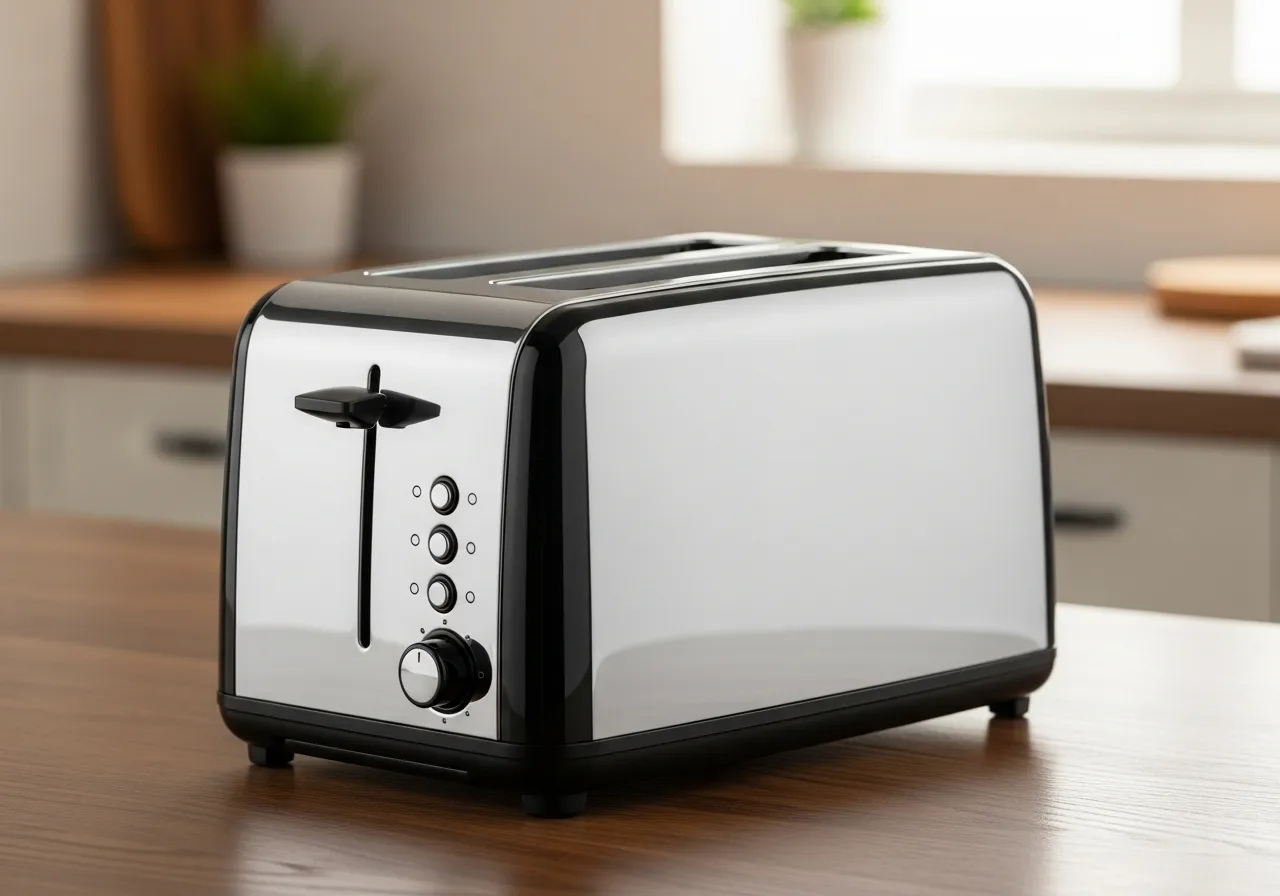
The history of the toaster is often dismissed as a footnote in the grand narrative of technology, a trivial chronicle of burnt crumbs and jammed springs. This is a fundamental error. To dismiss this appliance is to ignore one of the most potent symbols of the twentieth century’s domestic reorganization. Far from being a mere heating element, the history of the toaster is a roadmap of our cultural obsession with control, convenience, and the mechanization of the household. It stands as a chrome-plated monument to the moment we decided that fire, the most primal of elements, could be tamed, timed, and placed on a lace doily.
Looking closer at the history of the toaster reveals a silent struggle for power within the home. As electricity replaced coal, the dynamics of breakfast shifted, and the appliance became a fulcrum for changing gender roles. The history of the toaster is not just about browning bread; it is about the displacement of labor and the expectations placed upon the “modern hostess.” It charts the journey from dangerous, open-coil contraptions that demanded constant vigilance to the autonomous vessels that allowed us to ignore the cooking process entirely. The flawed history of the toaster mirrors our own societal shift from active creators to passive consumers, willing to trade skill for the promise of consistent uniformity.
In this analysis, we will dissect every facet of the history of the toaster. We will begin with the archaic, labor-intensive rituals of the hearth, move through the dangerous dawn of exposed electric wires, and examine the disciplinary revolution of Charles Strite’s pop-up mechanism. We will explore how the history of the toaster relocated the kitchen to the dining table, reshaping family interactions, and finally, how it evolved into an Art Deco icon before succumbing to the modern absurdity of smart-tech. By rethinking the history of the toaster, we uncover how a small metal box reordered our mornings and defined the rhythm of modern life.
The Archaic Slice: Toasting Rituals Before the Electric Age
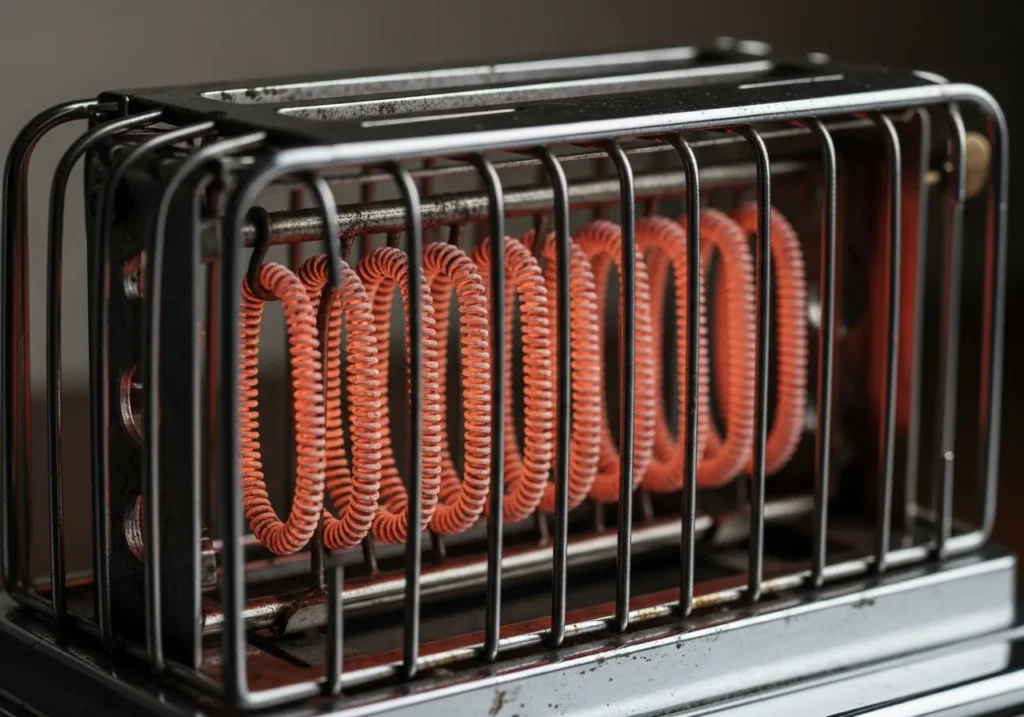
To understand the true history of the toaster, one must first look away from the countertop and toward the hearth, where the act of browning bread was less a convenience and more a confrontation with fire. Before the sanitized, electric history of the toaster began, toasting was a visceral, manual labor performed with wrought-iron forks and wire frames. It was a hazardous dance involving long-handled utensils and open flames, demanding a physical proximity to heat that modern appliances have successfully obscured. This early chapter in the history of the toaster was defined not by the “pop” of a spring, but by the constant vigilance of the cook, whose face would flush in the glow of the embers while holding the bread steady against the unpredictable flicker of a coal or wood fire.
It is critical to note that the history of the toaster did not originate from a culinary desire for crunch, but from a strict biological imperative: preservation. In a pre-preservative era, bread went stale rapidly, and toasting was the primary method of salvaging a loaf that had hardened beyond palatability. Thus, the history of the toaster is fundamentally a history of frugality. By carbonizing the exterior, households could revive the interior crumb, masking the age of the grain. Unlike the modern history of the toaster, which encourages the consumption of fresh slices specifically bought for toasting, the archaic method was a tool of waste management, a way to force longevity out of a perishable resource.
Perhaps the most overlooked aspect of the pre-electric history of the toaster is the human element of skill. Producing a perfectly browned slice over a roaring fire was a mark of domestic competence, often delegated to servants or the matriarch who understood the temperament of the stove. The primitive history of the toaster was, therefore, a test of patience and timing. One moment of inattention meant a charred ruin, a stark contrast to the automated history of the toaster that would later emerge to strip the user of both the risk of failure and the satisfaction of mastery. The flawed history of the toaster begins here: with the human hand directly involved in the alchemy of heat, a connection that technology would spend the next century severing.
Wires, Sparks, and the “El Tosto”: The Dangerous Dawn of Electrification
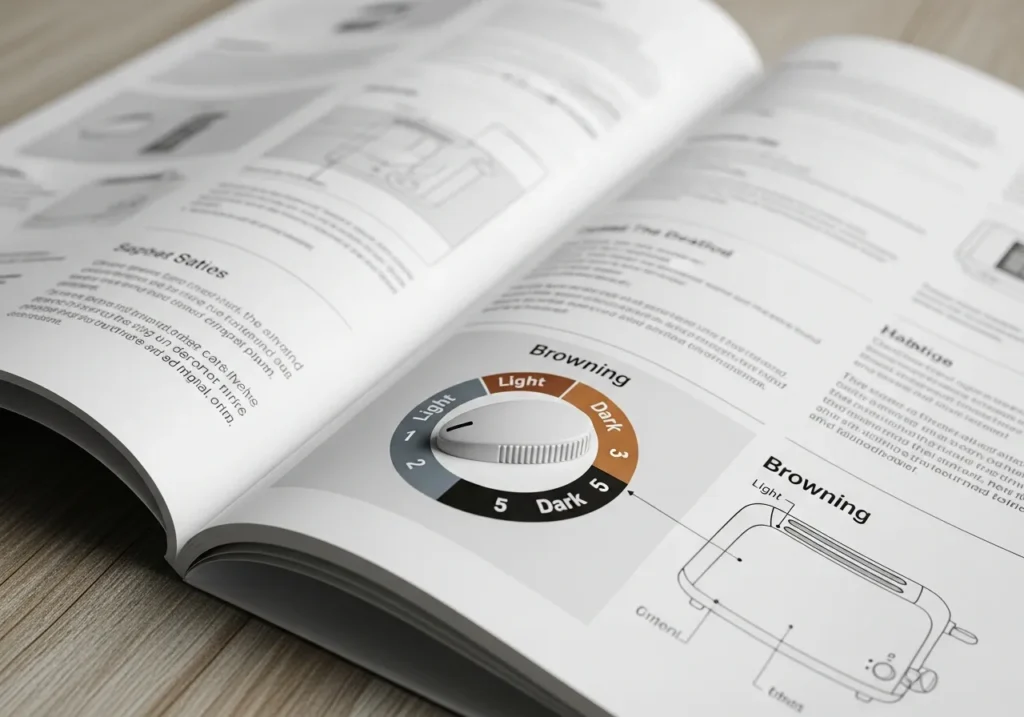
The true electric history of the toaster could not begin until the physics of resistance caught up with the ambition of engineers. For years, the history of the toaster was stalled by metallurgy; attempting to trap fire in a wire usually resulted in melted metal and short circuits. It was Albert Marsh’s 1905 invention of Nichrome—an alloy of nickel and chromium—that finally provided a filament capable of surviving the high-heat demands of the history of the toaster. This was the spark that ignited the domestic appliance revolution. Suddenly, the history of the toaster shifted from an external heat source to an internal one. Yet, this technological leap did not immediately yield convenience; it merely domesticated the danger, bringing the searing heat of the hearth directly onto the breakfast table without a protective cage.
In 1909, General Electric capitalized on Marsh’s alloy with the D-12, a device that looms large in the visual history of the toaster. Designed by Frank Shailor, the D-12 was a porcelain-base skeleton of exposed wires, a terrifyingly beautiful object that defined the early electric history of the toaster. Unlike modern iterations, this machine had no chassis to hide its workings; the history of the toaster at this stage was one of naked voltage. It lacked sensors, timers, or safety guards. The user was forced to stare into the glowing elements, judging doneness by eye. In this phase of the history of the toaster, a moment of distraction resulted not just in burnt bread, but potentially a kitchen fire, demanding a level of vigilance that belied the promise of leisure.
The mechanical evolution during this era of the history of the toaster was characterized by clumsy ingenuity. These were the days of “perchers,” “pinchers,” and “floppers”—designs that required the user to manually interact with the hot device to flip the bread. Rethinking the history of the toaster through these gadgets reveals a paradoxical increase in cognitive load. You had to open a wire cage, let the bread slide down, and snap it back up, risking scorched fingertips with every slice. The flawed history of the toaster in the 1910s was not about automation; it was about interaction. Far from liberating the housewife, the early electric history of the toaster merely provided her with a new, more precise instrument of labor, one that required her undivided attention to function.

The Mechanism of Judgment: Charles Strite and the Pop-Up Revolution
If the early history of the toaster was defined by danger, the next chapter was defined by strict discipline. Charles Strite, a mechanic fed up with the charred failures of his factory cafeteria, decided that human judgment was simply too flawed to be trusted with breakfast. In 1919, he patented the pop-up mechanism, a pivotal moment in the history of the toaster that fundamentally altered the relationship between the cook and the calorie. By incorporating a timer and a spring, Strite removed the need for visual monitoring. This intervention in the history of the toaster suggested that the perfect slice was a matter of mechanics, not art. The history of the toaster was no longer about providing heat; it was about enforcing a standard, automating the very concept of doneness, and removing the variable of human attention from the morning equation.
This mechanical arrogance reached the domestic market in 1926 with the Toastmaster 1-A-1. This specific device is a cornerstone in the history of the toaster, as it was the first to promise “perfect toast every time” without the user lifting a finger. For the first time in the history of the toaster, the machine possessed the final say. You lowered the lever, surrendering control, and the machine ejected the product only when its internal logic deemed it ready. Rethinking the history of the toaster through the Toastmaster reveals a subtle power shift: the appliance was no longer a passive tool but an active agent. The consequences of the history of the toaster here are clear—we gladly traded our agency for the guarantee of uniformity, allowing a simple bimetallic strip to decide the fate of our breakfast.
The tyranny of the slot soon extended beyond the machine itself, influencing the very food it was meant to serve. The 1928 invention of pre-sliced bread is often cited as a standalone marvel, yet it is inextricably linked to the history of the toaster. The erratic, hand-cut doorstops of the past could not fit into Strite’s narrow slots. Therefore, the history of the toaster necessitated the standardization of the loaf. Bakeries began slicing bread to specific millimeters to accommodate the appliance, a clear instance where the history of the toaster reshaped the supply chain. The flawed history of the toaster is that we assume it adapted to our needs; in reality, through the rigid geometry of the toaster slot, we adapted our food to suit the machine.

The Dining Table Shift: Gendered Labor and the “Hostess” Ideal
The history of the toaster is inextricably bound to a radical spatial realignment of the American home. Before the electric cord, cooking was an activity confined to the kitchen, a hot, odorous zone often separated from the dining area by a swinging door. The history of the toaster facilitated a breach of this boundary, allowing food preparation to migrate from the hidden “back of house” to the performative stage of the dining table. This was a significant departure from Victorian norms; suddenly, the machinery of cooking was polished enough to sit alongside fine china. The history of the toaster turned breakfast into a public event, transforming the solitary labor of the cook into a social spectacle where the appliance hummed quietly among the family, sanitizing the messy reality of food production.
Marketing in the 1920s and 30s seized upon this, framing the history of the toaster as a vehicle for the “modern hostess.” Advertisements did not focus on voltage or BTUs, but on “daintiness” and the elimination of “kitchen drudgery.” The history of the toaster was sold as an aesthetic upgrade, a way for the woman of the house to remain seated and poised rather than flushed and harried over a stove. In this narrative, the history of the toaster was a tool of elegance, untethering the housewife from the heavy iron range. However, rethinking the history of the toaster reveals that this didn’t necessarily reduce labor; it merely relocated it, demanding that the woman now perform her domestic duties under the gaze of her family and guests, maintaining a facade of effortless hospitality while managing the machinery.
Crucially, the history of the toaster disrupted the matriarchal monopoly on hot food. Because the device was safe and automated, it introduced the concept of “self-service” to the morning meal. For the first time in the domestic history of the toaster, men and children were encouraged to prepare their own main course. The consequences of history of the toaster included a subtle democratization of the breakfast table, chipping away at the rigid gender roles that dictated who served and who was served. While the mother likely still bought the bread and cleaned the crumbs, the history of the toaster allowed the father to depress the lever, creating a fleeting illusion of culinary independence that presaged the more casual dining habits of the post-war era.
Chrome Cathedrals: Design, Aesthetics, and the Consumer Future
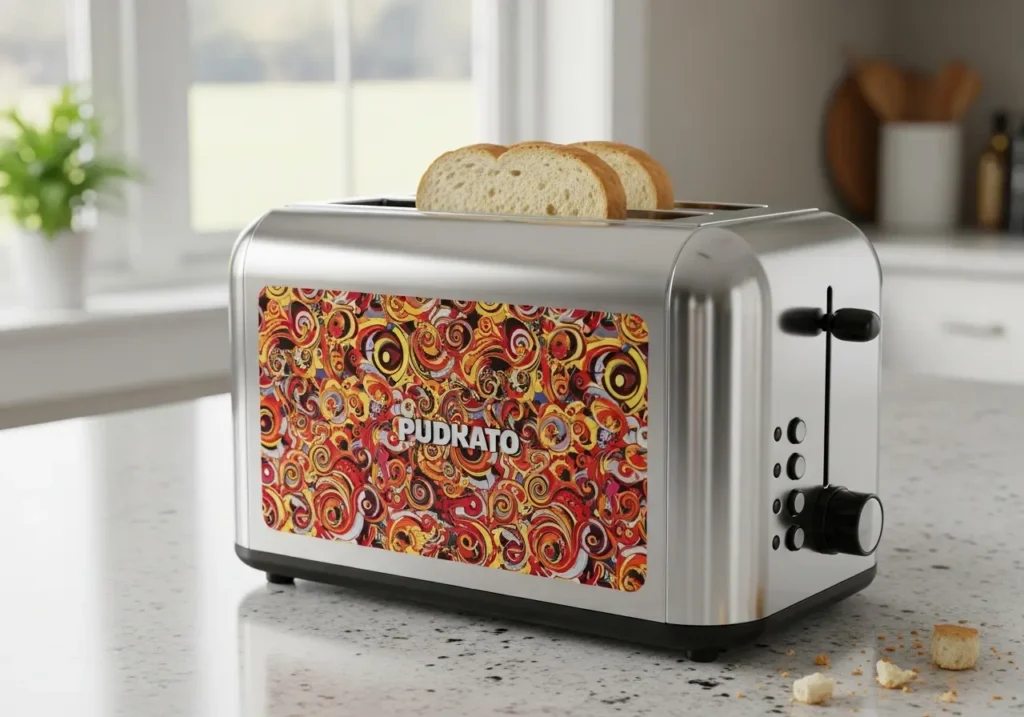
By the mid-twentieth century, the history of the toaster had transcended mere utility to become a centerpiece of industrial art. The appliance ceased to be a skeletal collection of wires and morphed into a chrome-plated sculpture, reflecting the “Machine Age” obsession with speed and aerodynamics. In this golden era of the history of the toaster, devices like the iconic Sunbeam T-9 were not designed to hide in a cupboard; they were built to anchor the sideboard. Modeled after the curves of the Streamline Moderne movement, these toasters resembled miniature skyscrapers or idling automobiles. The history of the toaster at this stage mirrored the optimism of the American century, where even a device for browning bread was treated with the architectural reverence usually reserved for public buildings. It was a shiny, reflective promise of a frictionless future.
However, as the market saturated, the history of the toaster collided with the economic necessity of replacement. Once every household owned a reliable toaster—many of which, like the Sunbeam, were built to last a lifetime—manufacturers faced a crisis of durability. The post-war history of the toaster is consequently a study in planned obsolescence and feature creep. To justify new purchases, the appliance was complicated with marginal utilities: wider slots, dedicated bagel settings, and defrost buttons. The flawed history of the toaster in the late twentieth century was driven by the need to reinvent a wheel that was already rolling perfectly. We saw the introduction of cheap plastics and digital timers, moving the history of the toaster away from the repairable electromechanical tank toward the disposable commodity.
Today, we face the “smart” iteration of this lineage, perhaps the most absurd chapter in the history of the toaster. The integration of Wi-Fi, touchscreens, and app connectivity represents a fundamental misunderstanding of the appliance’s purpose. Rethinking the history of the toaster through these high-tech gadgets reveals a desperation to collect data rather than improve breakfast. A touchscreen does not brown bread better than a bimetallic strip; it only adds a point of failure. The consequences of the history of the toaster evolving into an “Internet of Things” device are that we have successfully gentrified a simple heating element. We have distanced ourselves so thoroughly from the source of heat that the history of the toaster is now more about software updates than the primal satisfaction of a hot meal.
Conclusion
As we survey the arc of this appliance, the history of the toaster reveals itself as a journey from active engagement to passive consumption. We began with the visceral reality of the hearth, where toasting bread was a test of patience and skill, a tactile conversation between the cook and the fire. The narrative then shifted to the early electric era, a time in the history of the toaster defined by dangerous exposed coils and the constant threat of burnt fingertips. This eventually gave way to the discipline of the pop-up mechanism, a pivotal moment in the history of the toaster where we willingly surrendered our judgment to a timer, allowing a spring-loaded machine to dictate the quality of our breakfast while standardizing our bread to fit its steel slots.
Beyond mere mechanics, the history of the toaster acted as a silent architect of our domestic lives. It pulled the act of cooking out of the hidden kitchen and placed it onto the dining table, transforming a chore into a performance of modern hospitality. Throughout the history of the toaster, we see the shifting sands of gendered labor, where the appliance promised to liberate the “hostess” but often just reframed her duties as aesthetic performances. From the chrome-plated cathedrals of the Art Deco era to the plastic disposability of the late twentieth century, the history of the toaster has always mirrored our broader consumer values, reflecting our shift from cherishing durability to accepting planned obsolescence.
Ultimately, the history of the toaster is a cautionary tale about our relationship with technology. As we stare down the barrel of an Internet of Things future, where “smart” devices complicate the simple act of heating bread, we must pause. The consequences of history of the toaster suggests that in our quest for ultimate convenience, we often engineer away the satisfaction of the process. Rethinking the history of the toaster urges us to appreciate the elegance of the simple mechanical solution. We should be wary of adding software to a job that only requires resistance and heat, lest we forget that the best toast usually comes from a little bit of attention, not an algorithm.