
A cultural Spotlight tracing the like button history, the UX decisions, and psychological levers that turned a tiny icon into the atom of social attention.
Table of Contents
Introduction
In the grand timeline of digital communication, few interface elements have wielded as much power as the humble Like button. It is a feature so ubiquitous that we rarely pause to consider its origins or its cost. The Like button history is not merely a chronicle of code updates; it is a roadmap of how Silicon Valley engineered a new form of social currency. What began as a convenient shorthand for acknowledgment has mutated into the atom of the attention economy, fundamentally altering how we validate one another and perceive our own self-worth.
We tend to view these icons as neutral tools, but the Like button’s history reveals a deliberate progression toward addiction. We obsess over engagement metrics, deleting posts that fail to perform, and measuring our social standing in binary clicks. This psychological shift was not an accident; it was a design choice. The trajectory moved from a genuine attempt to reduce noise in comment sections to a sophisticated lever used to maximize time on site. We surrendered our autonomy for the dopamine hit of a red notification bubble, allowing algorithms to dictate what we see.
This deep dive explores the untold chapters of the Like button history, peeling back the layers of its evolution. We will trace its lineage from the scrapped “Awesome” button and the internal struggles at Facebook to the behaviorist psychology baked into its design. We will analyze how the standardization of the “Like” fueled the clickbait economy and the rise of influencers. Finally, we will examine the modern backlash and the attempts to hide counts to salvage our mental health. By understanding the Like button history, we can begin to reclaim our attention from the machines built to harvest it.
The Pre-History and the “Awesome” Button That Almost Was
When excavating the true origins of social feedback, one quickly realizes that the Like button history did not begin within the walled gardens of Facebook. The concept was actually pioneered by FriendFeed in 2007, a platform that recognized the need to declutter conversation threads. Before this innovation, forums were choked with repetitive comments simply saying “thanks” or “cool,” which drowned out substantive discussion. The early Like button history was surprisingly utilitarian; it was designed as a janitorial tool for community management rather than a dopamine trigger. By allowing users to acknowledge a post with a single click, FriendFeed created a streamlined signal that solved a messy user interface problem, a legacy that is often overlooked when we analyze the explosive Like button history that followed.
Inside Facebook, the narrative took a parallel but distinct path during a 2007 hackathon. Designers Leah Pearlman and Justin Rosenstein spearheaded a project initially dubbed the “Awesome” button. This prototyping phase is a critical chapter in the Like button history because it highlights the initial intent: frictionless positivity. The team wanted to lower the barrier to entry for interaction, making it as easy as possible for users to signal validation. However, the semantics were tricky. Calling the feature “Awesome” limited its application—marking a tragic news story as “awesome” would be grotesque. This semantic hurdle plagued the development team and is a recurring theme in the flawed Like button history, proving that human emotion is difficult to compress into a binary switch.
Despite its current ubiquity, the feature faced significant internal resistance, delaying its launch until February 2009. Mark Zuckerberg was reportedly skeptical, fearing that the button would cannibalize comments and reduce deep engagement on the platform. This hesitation marks a pivotal moment in the Like button history, representing the last stand of qualitative interaction before the shift toward quantitative metrics. It took nearly two years of debate to greenlight the feature. When it finally launched, it did exactly what skeptics feared, and proponents hoped: it replaced nuance with volume. This decision fundamentally altered the trajectory of the Like button history, transforming it from a mere productivity hack into the primary engine of the attention economy.
Designing Dopamine: The Psychology Behind the Click
The most unsettling aspect of the Like button history isn’t its code, but its deliberate exploitation of human biology. Designers didn’t just stumble upon high engagement rates; they tapped into B.F. Skinner’s behaviorist psychology, specifically the concept of variable reward schedules. When we post content, we don’t know if we will get five likes or fifty. This unpredictability creates a “slot machine” effect in our brains. Every time we pull down to refresh our feed, we are pulling the lever, hoping for a jackpot of red notification bubbles. This mechanism is central to understanding the addictive nature of the Like button history, transforming a communication tool into a habit-forming device that keeps users tethered to the platform in a state of perpetual anticipation.
Deepening this psychological grip is the reliance on social validation loops. Humans are evolutionarily hardwired to seek acceptance from their tribe, and the Like button history is essentially a digitization of this primal need. The interface choices—bright red badges, accumulating counters, and real-time feedback—were engineered to trigger a dopamine release associated with social bonding. It is a synthetic form of eye contact or a nod of approval. However, the consequences of the Like button history are profound because they strip away the nuance of face-to-face interaction. Instead of genuine connection, we are fed a diet of low-calorie validation, where the number of clicks becomes a proxy for how much we are loved or respected by our peers.
Ultimately, this psychological architecture led to the quantification of the self, a dark turn in the flawed Like button history. For the first time, social standing was explicitly measured and publicly displayed. Users began to curate their lives not for authenticity but to maximize engagement, effectively turning their existence into a performance art piece. If a post didn’t garner enough likes, it was often deleted, as if the lack of digital applause invalidated the memory itself. This shifting baseline of self-worth is perhaps the most damaging legacy in the Like button history. We started valuing the metric over the moment, allowing a simple database counter to dictate our mood and self-esteem, creating a culture where visibility is mistaken for value.
Standardization of Engagement: How the Like Conquered the Web
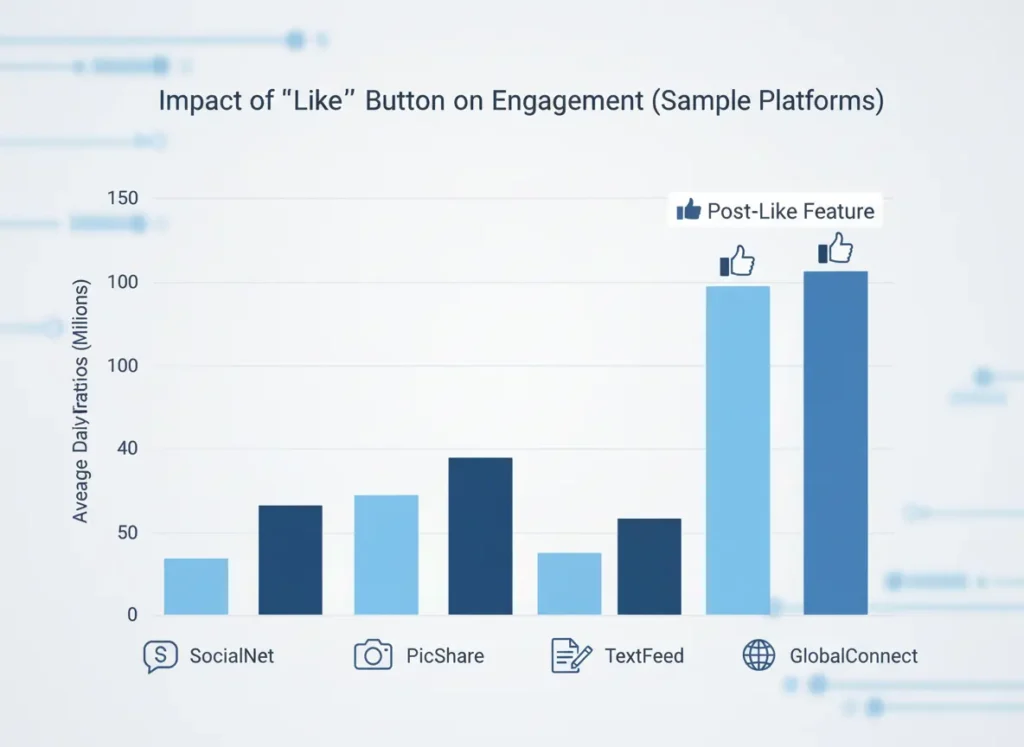
In April 2010, a seismic shift occurred in the Like button history that forever changed the texture of the internet. Facebook launched the Open Graph API, effectively allowing the “thumbs up” icon to escape the platform’s walled garden and colonize the broader web. Suddenly, news sites, blogs, and e-commerce stores embedded the code, turning the entire digital landscape into a viable ecosystem. This expansion transformed the Like button history from a feature of internal engagement into a global tracking mechanism. Every time a user encountered that blue button on an external site, data was fed back to the mothership, creating a comprehensive map of user interests. This era of the Like button history solidified the icon as the standard currency of the web, proving that the button was no longer just a tool for expression, but a sophisticated listening device.
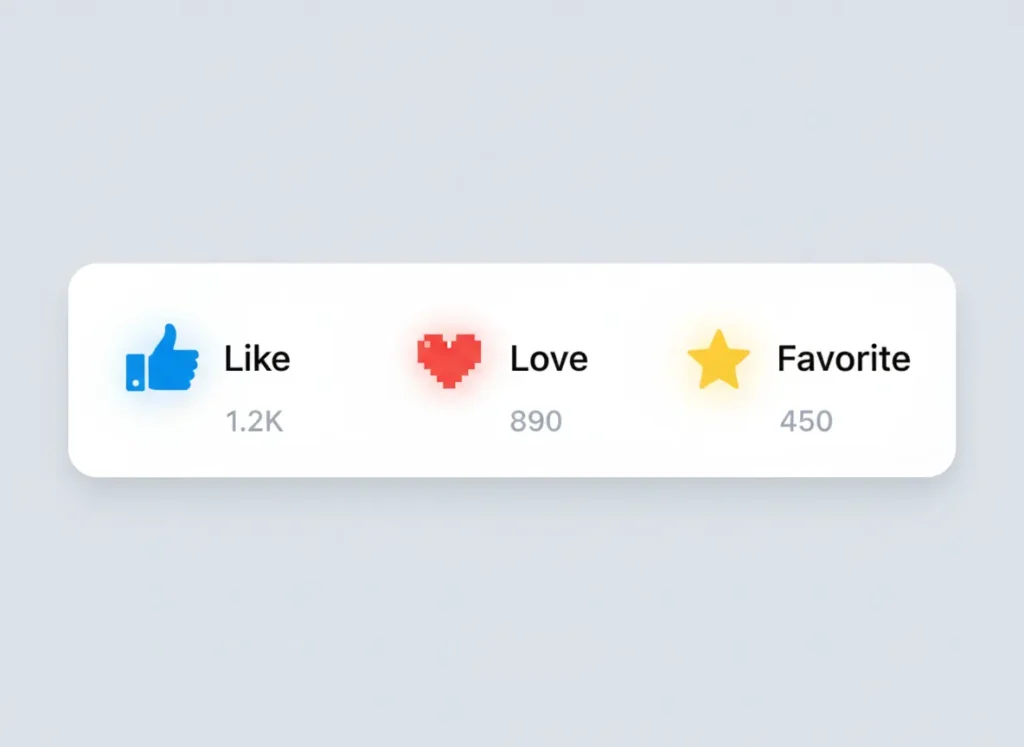
As this mechanic proved successful, competitors scrambled to replicate the dopamine feedback loop, leading to a homogenization of the Like button history. A defining moment came in 2015 when Twitter controversially ditched its distinctive “favorite” star in favor of the generic heart. This was not merely a cosmetic update; it was a fundamental psychological shift in the Like button history. Stars suggested bookmarking or intellectual appreciation, a “save for later” mentality. Hearts, however, demanded emotional investment. By aligning with the visual language of Facebook and Instagram, Twitter admitted that the Like button history had won. The internet was no longer about curating resources; it was about visceral, emotional reaction. This change flattened the user experience across apps, making the digital world feel increasingly uniform and driven by impulse rather than utility.
Yet, the binary nature of the thumbs-up eventually hit a wall, forcing a rethinking of the Like button history. Users found themselves in awkward social binds when friends posted about tragedies or systemic injustices; “liking” a funeral announcement felt sociopathic. In 2016, Facebook introduced “Reactions”—Love, Haha, Wow, Sad, and Angry—to address this emotional deficit. This expansion was a tacit admission that the previous era of the Like button history was deeply flawed in its simplicity. While it offered more nuance, it still trapped human expression within a pre-selected menu. We were given five choices to describe the infinite complexity of the human experience. Even with this evolution, the Like button history remained a story of reductionism, forcing our chaotic reality into clean, data-friendly categories that algorithms could easily digest.
The Algorithmic Shift: The Like as an Economic Unit
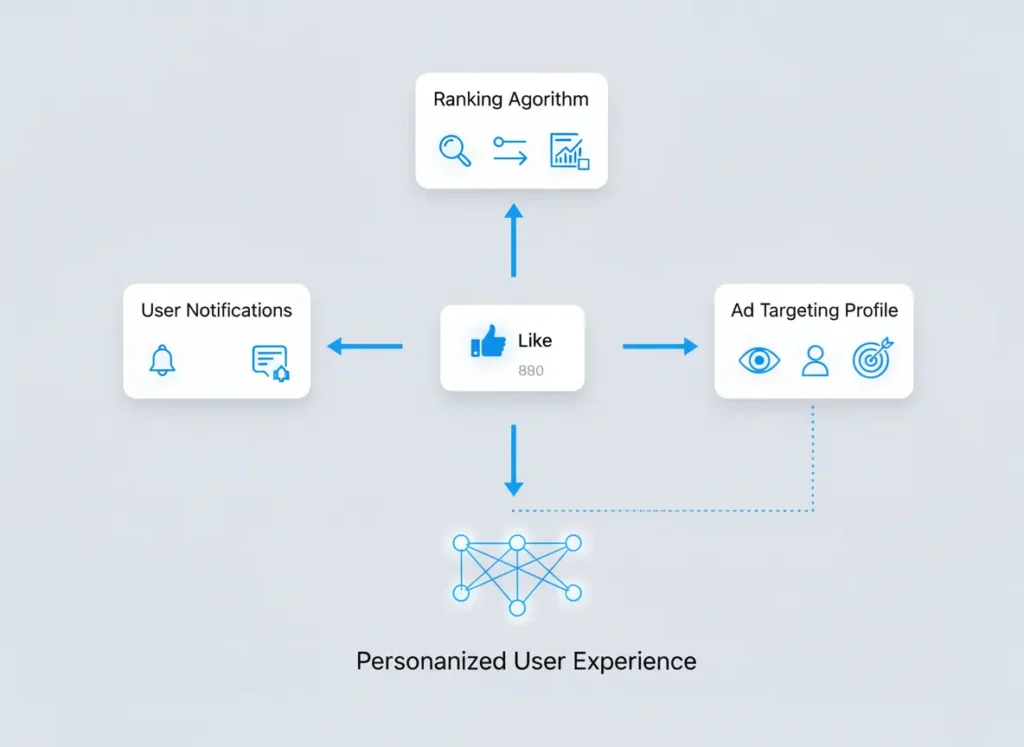
The transition from chronological timelines to algorithmic feeds represents the most commercially significant chapter in the Like button history. Before this shift, content was displayed based on time; afterwards, it was sorted by potential engagement. The “Like” became the primary fuel for EdgeRank and subsequent algorithms, serving as a high-fidelity signal that told platforms exactly what to prioritize. We must recognize that the Like button history is fundamentally a history of data harvesting. Every click trained the machine to understand what kept eyeballs glued to the screen. The platform stopped showing us what we needed to see and started feeding us what we were most likely to click, prioritizing viral impulses over meaningful connections to maximize ad revenue.
Consequently, this algorithmic preference birthed the era of clickbait, one of the most toxic consequences of the Like button history. Content creators and media outlets quickly realized that nuance does not go viral. To survive in an ecosystem defined by the Like button history, headlines became sensational, polarizing, and often misleading. The pursuit of the “Like” incentivized outrage. If a post made you angry enough to react, the algorithm treated it as a success. This reshaped journalism and public discourse, turning information into entertainment. We are still living through the wreckage of this phase of the Like button history, where the truth is often less profitable than a lie that confirms our biases or triggers an immediate emotional reaction.
Finally, the aggregation of these clicks created a new financial hierarchy known as the influencer economy. The Like button history provided the reliable metrics necessary to monetize attention. “Likes” evolved from social strokes into hard currency. Brands began to value creators not by their talent or utility, but by their engagement rates, effectively turning the Like button history into a distinct market economy. This shift professionalized the pursuit of validation. Users began treating their social output as a business strategy, optimizing their lives for maximum engagement. In this sense, the flawed Like button history didn’t just change how we communicate; it created a new labor force whose primary job is to farm digital approval for profit.
The Future and The Correction: Hiding the Count
As we navigate the current landscape, the Like button history has reached a critical juncture: the reckoning. Years of accumulated data have made it impossible to ignore the correlation between social quantification and declining mental health, particularly among younger generations. Even the original architects of the feature have expressed profound regret. Justin Rosenstein, the engineer who helped build the initial prototype, has since described likes as “bright dings of pseudo-pleasure” that distract from meaningful life. This pivot marks a somber chapter in the Like button history, acknowledging that the tools designed to connect us have inadvertently created an environment of anxiety and constant comparison. We are witnessing a collective “buyer’s remorse” regarding the engagement economy, forcing the tech industry to question the very ethical foundation of the Like button history.
In response to this mounting pressure, platforms have begun rethinking the Like button history by experimenting with hiding public counts. Instagram and Facebook initiated tests to obscure the total number of likes from the audience, making them visible only to the post’s author. This is a radical attempt to rewrite the Like button history, aiming to de-pressurize the user experience. The theory is simple: if the score isn’t public, the performance anxiety disappears, and users might return to sharing authentic moments rather than staged highlights. While this feature remains optional in many regions, its mere existence acts as an admission that the competitive aspect of the Like button history was a design flaw. It suggests that for social media to remain sustainable, it must retreat from the hyper-metricized environment it spent a decade perfecting.
Looking forward, the next phase of the Like button history must prioritize qualitative depth over quantitative breadth. The era of the “blind click” is losing its luster as users crave genuine community over hollow numbers. Emerging platforms and updated UX designs are exploring ways to encourage more meaningful interactions—commentary, remixing, and direct messaging—rather than passive scrolling. If the consequences of the Like button history have taught us anything, it is that human connection cannot be fully captured by a binary counter. The future of social technology depends on moving beyond the dopamine loop. To survive, the Like button history must evolve from a ledger of popularity into a genuine signal of value, or risk being remembered as the digital mechanism that broke our spirit.
Conclusion
The Like button history is a journey that transformed a digital utility into a mechanism of addiction. We traced its lineage from a practical solution for decluttering comment threads on FriendFeed to the internal “Awesome” button hackathon at Facebook. What was intended to be a frictionless way to signal approval quickly morphed into a psychological weapon, exploiting variable reward schedules to keep us hooked. As we observed, the standardization of these engagement metrics across the web homogenized our emotional expression, reducing the complexity of human interaction into binary data points that fueled the rise of the influencer economy and algorithmic feeds.
Furthermore, our analysis of the flawed Like button history highlighted the severe downstream effects on both individual mental health and public discourse. The relentless pursuit of high engagement numbers incentivized sensationalism, polarized our news feeds, and tethered our self-esteem to a public scoreboard. We effectively monetized our attention, trading genuine connection for the cheap thrill of a red notification badge. The regret expressed by the original architects, combined with recent experiments to hide public counts, serves as a stark admission that this social experiment had unintended, damaging consequences that we are only now beginning to mitigate.
Ultimately, the Like button history stands as a critical cautionary tale for the future of user experience design. We are at a pivotal moment where we must decide whether we will continue to be ruled by these digital dopamine triggers or demand tools that serve our well-being. The next chapter of the Like button history must not be about accumulating more clicks, but about fostering environments where connection is measured by depth rather than volume. It is time to reclaim our agency from the algorithm, valuing authentic human moments over the artificial validation of a counter.